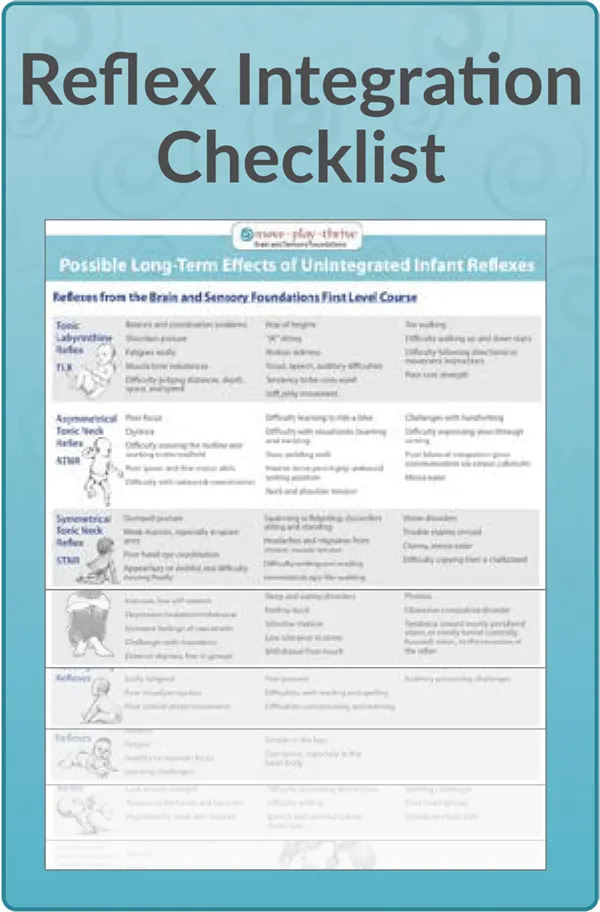
Possible Long Term Effects:
- Balance and coordination problems
- Shrunken posture
- Fatigues easily
- Muscle tone usually weak or too tight
- Difficulty judging distance, depth, space and speed
- May have a fear of heights
- “W” leg position when floor sitting
- Motion sickness
- Visual, speech, auditory difficulties
- Tendency to be cross-eyed
- Stiff jerky movement
- Toe walking
- Difficulty walking up and down stairs
- Difficulty following directional or movement instructions
|
The Tonic Labyrinthine Reflex has two forms, forward and backward:
- Forward: As the head bends forward, the whole body, arms, legs and torso curl inward in the characteristic fetal position.
- Backward: As the head is bent backward, the whole body, arms, legs and torso straighten and extend.
TLR provides the baby with a means of learning about gravity and mastering neck and head control outside the womb. This reflex gives the baby opportunities to practice balance, increase muscle tone and develop the proprioceptive and vestibular senses. Eventually the TLR interacts with other reflexes and bodily processes to help the child develop coordination, posture and correct head alignment from infancy through toddlerhood.
It is critical for the TLR to do its “job” because correct alignment of the head with the rest of the body is necessary for balance, visual tracking, auditory processing and organized muscle tone, all of which are vital to the ability to focus and pay attention.
|