---
title: "Move Play Thrive | Brain and Sensory Foundations Course - Can Primitive Reflex Integration Relieve Bedwetting & Bowel Issues?"
description: "Bed wetting, poor bowel control and IBS can be related to retained primitive reflexes. Integrating reflexes through rhythmic movements has shown good success."
url: "https://moveplaythrive.com/conditions/bedwetting-bladder-and-bowel/can-primitive-reflex-integration-relieve-bedwetting-bowel-issues"
date: "2026-07-06T07:45:41+00:00"
language: "en-US"
---
# Can Primitive Reflex Integration Relieve Bedwetting & Bowel Issues?
by Sonia Story, M.S.
There are many possible reasons for challenges such as bedwetting, poor bladder control, toilet-training delays, and bowel issues such as day-time soiling and irritable bowel syndrome (IBS).
Unintegrated primitive reflexes could be involved in bladder and bowel challenges. When bladder and bowel issues are present, often the [Spinal Galant reflex](https://moveplaythrive.com/index.php?option=com_content&view=article&id=471&catid=101&Itemid=913 "Learn about the Spinal Galant Reflex") or the [Spinal Perez reflex](https://moveplaythrive.com/index.php?option=com_content&view=article&id=475&catid=101&Itemid=913 "Understand the importance of the Spinal Perez Reflex")\*, or both, are unintegrated (in immature states). Both of these spinal reflexes are stimulated by touch on the back and are important in human birth and development.
The action of these reflexes can initiate a release of the bladder (and sometimes bowels). In infancy we need the Spinal Galant and Spinal Perez reflexes; however, over the first year of life, the primitive reflexes are supposed to become dormant and inactive. If the Spinal Galant and Spinal Perez reflexes remain active, or retained past toddlerhood, they become a hindrance leading to possible bladder and bowel challenges among other challenges (Blomberg, 2015).
In addition to bladder and bowel challenges, when unintegrated, the Spinal Galant and Spinal Perez reflexes may contribute to sensory processing issues—especially hypersensitivity on the back—fidgeting, poor concentration, and poor short-term memory (Goddard, 2023). Older children and adults may experience back pain and leg pain (Blomberg, 2015). When the Spinal Galant reflex is unintegrated on one side, it is associated with [scoliosis](https://moveplaythrive.com/index.php?option=com_content&view=article&id=286&catid=102&Itemid=648 "Can rhythmic movements and reflex integration help scoliosis?") (Sharma & Saxena, 2024; Ferrari et al., 2010) and challenges with posture and gait (Goddard, 2023).
Below are four success stories showing how innate rhythmic movements and reflex integration movements may reduce bedwetting and promote successful toilet training. Many other challenges were relieved for these children as well.
\*Also known as the Perez del Pulgar Marx reflex; a related reflex is named Juanico-Perez. The Spinal Perez reflex integration protocols are included in the [Brain and Sensory Foundations, Second Level course](https://moveplaythrive.com/index.php?Itemid=528 "In-depth, powerful course in Primitive Reflex Integration").
[](https://moveplaythrive.com/index.php?option=com_content&view=article&id=116:ot-learns-simple-effective-tools-to-help-with-bedwetting-for-7-year-old&catid=65:case-studies&Itemid=503 "OT Learns Simple, Effective Tools to Help with Bedwetting for 7-Year-Old")
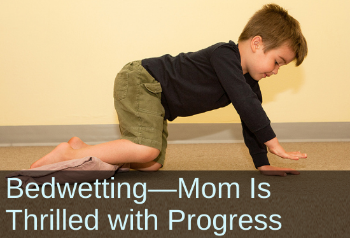
This OT had previously relied on interoception exercises and behavioral-based strategies to address toileting issues, without great success. [This case study shows how rhythmic movements and integrating the Spinal Galant reflex helped stop bedwetting](https://moveplaythrive.com/index.php?option=com_content&view=article&id=116:ot-learns-simple-effective-tools-to-help-with-bedwetting-for-7-year-old&catid=65:case-studies&Itemid=503 "OT Learns Simple, Effective Tools to Help with Bedwetting for 7-Year-Old").
[](https://moveplaythrive.com/index.php?option=com_content&view=article&id=260:bedwetting-fine-motor-skills-and-focus-improve-with-primitive-reflex-integration&catid=65:case-studies&Itemid=503 "Bedwetting, Fine Motor Skills, and Focus Improve with Primitive Reflex Integration")
This 8-year-old got relief from bed wetting, and improved handwriting. [See how his OT used rhythmic rocking and primitive reflex integration for his Spinal Galant and hand reflexes.](https://moveplaythrive.com/index.php?option=com_content&view=article&id=260:bedwetting-fine-motor-skills-and-focus-improve-with-primitive-reflex-integration&catid=65:case-studies&Itemid=503 "Bedwetting, Fine Motor Skills, and Focus Improve with Primitive Reflex Integration")
[](https://moveplaythrive.com/index.php?option=com_content&view=article&id=217:bowel-training-emotional-regulation-for-5-year-old-girl&catid=65:case-studies&Itemid=503 "Bowel Training, Emotional Regulation for 5-Year-Old Girl")
Four weeks of rhythmic movements can make a huge difference for toileting issues. Read this case study to[ see how this 5-year-old went from bowel incontinence to completely bowel-trained](https://moveplaythrive.com/index.php?option=com_content&view=article&id=217:bowel-training-emotional-regulation-for-5-year-old-girl&catid=65:case-studies&Itemid=503 "Bowel Training, Emotional Regulation for 5-Year-Old Girl").
[](https://moveplaythrive.com/index.php?option=com_content&view=article&id=235:boy-stops-drooling-begins-speaking-enjoys-playing-with-peers&catid=65:case-studies&Itemid=503 "Boy Stops Drooling, Begins Speaking, Enjoys Playing with Peers")
Rhythmic movements helped this 3.5-year-old boy with several challenging issues. [See how he was almost completely toilet trained in just 6 sessions](https://moveplaythrive.com/index.php?option=com_content&view=article&id=235:boy-stops-drooling-begins-speaking-enjoys-playing-with-peers&catid=65:case-studies&Itemid=503 "Boy Stops Drooling, Begins Speaking, Enjoys Playing with Peers").
**The combination of rhythmic movements and primitive reflex integration can lead to better bladder and bowel control and decreased bedwetting: [See more success stories here.](https://moveplaythrive.com/index.php?option=com_tags&view=tag&id=57:bedwetting-bladder-bowel "Case studies related to bedwetting, bladder, & bowel issues")**
[Find Out More](https://moveplaythrive.com/index.php?Itemid=362)
[Enroll Now](https://moveplaythrive.com/index.php?Itemid=362#enroll "Comprehensive rhythmic movement and primitive reflex Integration course")
**References**
Blomberg, H. (2015). *The rhythmic movement method: A revolutionary approach to improved health and well-being.* Lulu.com.
Ferrari, A., Ferrara, C., Balugani, M., & Sassi, S. (2010). Severe scoliosis in neurodevelopmental disabilities: clinical signs and therapeutic proposals. *European Journal of Physical and Rehabilitation Medicine, 46*(4), 563-580.
Goddard Blythe, S. (2023). *Reflexes, movement, learning & behavior. Analysing and unblocking neuro-motor immaturity*. Hawthorn Press.
Sharma, Y., & Saxena, A. (2024). Problems Associated with Persisting Primitive Reflex in Healthy School-going Children. *Journal of Clinical & Diagnostic Research*, *18*, 60-61.
## 
Sonia Story, M.S. has been teaching neurodevelopmental movements since 2006.
Sonia developed the Brain and Sensory Foundations program to provide comprehensive training in neurodevelopmental movements—combining innate rhythmic movements, play, primitive reflexes, and postural reflexes.
She earned a Bachelor's degree in biology/psychology and a Master’s degree in Movement Sciences. She is the author of [The Importance of Reflex Integration](https://moveplaythrive.com/index.php?Itemid=513) and the [Evidence eBook](https://moveplaythrive.com/index.php?Itemid=536 "Free 47 page Evidence eBook"), giving the rationale and evidence basis for using neurodevelopmental movements for helping with challenges such as ADHD, Sensory Processing Disorders, anxiety, emotional dysregulation, visual skill deficits, poor social skills, gross and fine motor delays and other neurodevelopmental and behavioral disorders.
Her work is featured in numerous podcasts, summits, and conferences, and in the books *Almost Autism: Recovering Children from Sensory Processing Disorder; Special Ed Mom Survival Guide; Family Health Revolution; and Same Journey, Different Paths—Stories of Auditory Processing Disorder.*
Sonia’s mission is to help children and families experience the profound benefits of neurodevelopmental and integrative movements for more functional and fulfilling lives.
[Read about Sonia's personal journey with reflex integration](https://moveplaythrive.com/#meet-sonia)
[Get more information about Sonia's education and CV](https://moveplaythrive.com/index.php?Itemid=517 "About Sonia Story-Education and CV")
## Schema
```json
{
"@context": "https://schema.org",
"@type": "BreadcrumbList",
"itemListElement": [
{
"@type": "ListItem",
"position": 1,
"name": "Home",
"item": "https://moveplaythrive.com"
},
{
"@type": "ListItem",
"position": 2,
"name": "Conditions",
"item": "https://moveplaythrive.com/conditions"
},
{
"@type": "ListItem",
"position": 3,
"name": "Bedwetting, Bladder, & Bowel",
"item": "https://moveplaythrive.com/conditions/bedwetting-bladder-and-bowel"
},
{
"@type": "ListItem",
"position": 4,
"name": "Can Primitive Reflex Integration Relieve Bedwetting & Bowel Issues?",
"item": "https://moveplaythrive.com/conditions/bedwetting-bladder-and-bowel/can-primitive-reflex-integration-relieve-bedwetting-bowel-issues"
}
]
}
```
```json
{
"@context": "https://schema.org",
"@type": "Article",
"mainEntityOfPage": {
"@type": "WebPage",
"@id": "https://moveplaythrive.com/conditions/bedwetting-bladder-and-bowel/can-primitive-reflex-integration-relieve-bedwetting-bowel-issues"
},
"headline": "Can Primitive Reflex Integration Relieve Bedwetting & Bowel Issues?",
"description": "by Sonia Story, M.S. There are many possible reasons for challenges such as bedwetting, poor bladder control, toilet-training delays, and bowel issues such as day-time soiling and irritable bowel syndrome (IBS). Unintegrated primitive reflexes could be involved in bladder and bowel challenges. When bladder and bowel issues are present, often the Spinal Galant reflex or the Spinal Perez reflex*, or both, are unintegrated (in immature states). Both of these spinal reflexes are stimulated by touch on the back and are important in human birth and development. The action of these reflexes can initiate a release of the bladder (and sometimes bowels). In infancy we need the Spinal Galant and Spinal Perez reflexes; however, over the first year of life, the primitive reflexes are supposed to become dormant and inactive. If the Spinal Galant and Spinal Perez reflexes remain active, or retained past toddlerhood, they become a hindrance leading to possible bladder and bowel challenges among other challenges (Blomberg, 2015). In addition to bladder and bowel challenges, when unintegrated, the Spinal Galant and Spinal Perez reflexes may contribute to sensory processing issues—especially hypersensitivity on the back—fidgeting, poor concentration, and poor short-term memory (Goddard, 2023). Older children and adults may experience back pain and leg pain (Blomberg, 2015). When the Spinal Galant reflex is unintegrated on one side, it is associated with scoliosis (Sharma & Saxena, 2024; Ferrari et al., 2010) and challenges with posture and gait (Goddard, 2023). Below are four success stories showing how innate rhythmic movements and reflex integration movements may reduce bedwetting and promote successful toilet training. Many other challenges were relieved for these children as well. *Also known as the Perez del Pulgar Marx reflex; a related reflex is named Juanico-Perez. The Spinal Perez reflex integration protocols are included in the Brain and Sensory Foundations, Second Level course. This OT had previously relied on interoception exercises and behavioral-based strategies to address toileting issues, without great success. This case study shows how rhythmic movements and integrating the Spinal Galant reflex helped stop bedwetting. This 8-year-old got relief from bed wetting, and improved handwriting. See how his OT used rhythmic rocking and primitive reflex integration for his Spinal Galant and hand reflexes. Four weeks of rhythmic movements can make a huge difference for toileting issues. Read this case study to see how this 5-year-old went from bowel incontinence to completely bowel-trained. Rhythmic movements helped this 3.5-year-old boy with several challenging issues. See how he was almost completely toilet trained in just 6 sessions. The combination of rhythmic movements and primitive reflex integration can lead to better bladder and bowel control and decreased bedwetting: See more success stories here. {loadmoduleid 159} References Blomberg, H. (2015). The rhythmic movement method: A revolutionary approach to improved health and well-being. Lulu.com. Ferrari, A., Ferrara, C., Balugani, M., & Sassi, S. (2010). Severe scoliosis in neurodevelopmental disabilities: clinical signs and therapeutic proposals. European Journal of Physical and Rehabilitation Medicine, 46(4), 563-580. Goddard Blythe, S. (2023). Reflexes, movement, learning & behavior. Analysing and unblocking neuro-motor immaturity. Hawthorn Press. Sharma, Y., & Saxena, A. (2024). Problems Associated with Persisting Primitive Reflex in Healthy School-going Children. Journal of Clinical & Diagnostic Research, 18, 60-61. {loadmoduleid 140} {loadmoduleid 141}",
"image": {
"@type": "ImageObject",
"url": "https://moveplaythrive.com/"
},
"publisher": {
"@type": "Organization",
"name": "Move Play Thrive",
"logo": {
"@type": "ImageObject",
"url": "https://moveplaythrive.com/images/2023_MPT_Logos_and_Graphics/MPT_COMPANY.png"
}
},
"author": {
"@type": "Person",
"name": "Sonia Story",
"url": "https://moveplaythrive.com/conditions/bedwetting-bladder-and-bowel/can-primitive-reflex-integration-relieve-bedwetting-bowel-issues"
},
"datePublished": "2024-09-08T21:11:54-07:00",
"dateCreated": "2024-09-08T21:11:54-07:00",
"dateModified": "2025-11-27T12:55:34-08:00"
}
```