# Research and Evidence
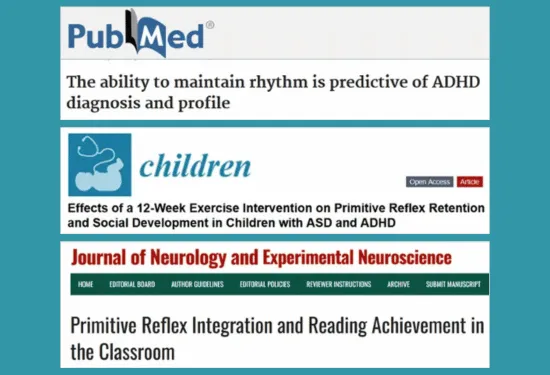
Here we explore [peer-reviewed research](https://moveplaythrive.com/index.php?Itemid=536 "Get over 40 pages of evidence with our Evidence eBook") and clinical evidence showing the connection between retained (unintegrated) primitive reflexes and dysfunction. A growing body of research and clinical observation show that reflex integration and innate rhythmic movements are effective for addressing many neurodevelopmental challenges.
[  ](https://moveplaythrive.com/resources/blog/research-and-evidence/kids-do-not-grow-out-of-deficits)
## [ Kids Do NOT Grow Out of Deficits ](https://moveplaythrive.com/resources/blog/research-and-evidence/kids-do-not-grow-out-of-deficits)
June 15, 2026
- [ Anxiety ](https://moveplaythrive.com/resources/blog/posts-by-tag/anxiety-blog)
- [ Rhythmic Movements ](https://moveplaythrive.com/resources/blog/posts-by-tag/rhythmic-movements-blog)
- [ Early Intervention ](https://moveplaythrive.com/resources/blog/posts-by-tag/early-intervention-blog)
- [ Behavior Issues ](https://moveplaythrive.com/resources/blog/posts-by-tag/behavior-issues-blog)
- [ Learning Challenges ](https://moveplaythrive.com/resources/blog/posts-by-tag/learning-challenges-blog)
- [ First Level course ](https://moveplaythrive.com/resources/blog/posts-by-tag/first-level-course-blog)
## Research Shows Most Children Have Retained Primitive Reflexes That Are Linked to Persistent Challenges
*Recent research revealed that a large majority of children—86 to 100 percent—exhibited retained primitive reflexes and associated motor deficits. For kids who struggle with motor deficits in early life, research also shows we cannot assume they will “grow out” of these challenges without intervention.*
[ Read more: Kids Do NOT Grow Out of Deficits ](https://moveplaythrive.com/resources/blog/research-and-evidence/kids-do-not-grow-out-of-deficits)
[  ](https://moveplaythrive.com/resources/blog/research-and-evidence/hope-for-stroke-parkinsons-and-dementia)
## [ Hope for Stroke, Parkinson's, and Dementia ](https://moveplaythrive.com/resources/blog/research-and-evidence/hope-for-stroke-parkinsons-and-dementia)
March 04, 2026
- [ Mental Health ](https://moveplaythrive.com/resources/blog/posts-by-tag/mental-health-blog)
- [ Teens and Adults ](https://moveplaythrive.com/resources/blog/posts-by-tag/teens-and-adults-blog)
- [ First Level course ](https://moveplaythrive.com/resources/blog/posts-by-tag/first-level-course-blog)
## Reclaiming Mobility and Function with the Power of Neurodevelopmental Movements
*Often we forget what our teachers have taught us. But sometimes a meaningful lesson sticks and we remember it forever. Many years ago, I received two valuable teachings regarding brain injury and Parkinson's disease that I have always remembered.*
[ Read more: Hope for Stroke, Parkinson's, and Dementia ](https://moveplaythrive.com/resources/blog/research-and-evidence/hope-for-stroke-parkinsons-and-dementia)
[  ](https://moveplaythrive.com/resources/blog/research-and-evidence/new-research-validates-rhythmic-movements)
## [ New Research Validates Rhythmic Movements ](https://moveplaythrive.com/resources/blog/research-and-evidence/new-research-validates-rhythmic-movements)
January 08, 2026
- [ ADHD ](https://moveplaythrive.com/resources/blog/posts-by-tag/adhd-blog)
- [ Rhythmic Movements ](https://moveplaythrive.com/resources/blog/posts-by-tag/rhythmic-movements-blog)
- [ Learning Challenges ](https://moveplaythrive.com/resources/blog/posts-by-tag/learning-challenges-blog)
## Why Rhythmic Movements Are Essential for Child Development, Learning, and Brain Maturity
*See research and case study evidence showing how innate rhythmic movements can help children with ADHD, dyslexia, autism, learning delays, and other neurodevelopmental challenges.*
[ Read more: New Research Validates Rhythmic Movements ](https://moveplaythrive.com/resources/blog/research-and-evidence/new-research-validates-rhythmic-movements)