

Primitive Reflex Integration Case Studies
9-Year-Old Can Now Ride Bike and do the Monkey Bars
Neurodevelopmental movements address issues with balance, coordination, and anxiety in just 8 weeks
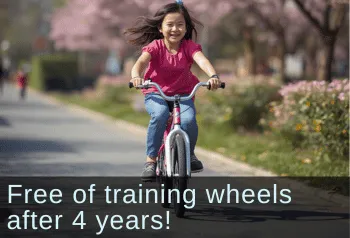
This 9-year-old had been struggling to ride a bike without training wheels for four years. After eight weeks of rhythmic movements and reflex integration from the Brain and Sensory Foundations course, she decided to try again, and within half an hour she was joyfully zooming around on her bike! She was also able to do the monkey bars for the first time, and demonstrated improved social skills.
Submitted by M.O., FALCON trainer (Educator)
| Before | After |
|---|---|
| Shy when meeting or interacting with new people, or playing in large groups of children | More comfortable when meeting with new people and interacting with others |
| Unable to complete the full set of monkey bars | Now able to complete the entire set of monkey bars |
| Had been trying to learn how to ride a bicycle without training wheels since she was 5 years old | Riding without training wheels! |
Scarlett is 9 years old. She is a very talented and smart girl, but what holds her back from doing more is her fear of trying new things and her fear of heights. She is also shy when meeting or interacting with new people or playing in large groups of children.
Scarlett was feeling frustrated because she wanted to be able to complete the full set of monkey bars. She had also been trying to learn how to ride a bicycle without training wheels since she was 5 years old.
I started working with her without telling her what the expected outcome would be. Instead, I explained that we would just be doing some exercises for fun and that these movements would be good for her body. The reason I chose this approach was to help her focus on the movements rather than overthinking whether she would meet any expectations.
I chose to begin working with only the rhythmic movements [from the Brain and Sensory Foundations course]. We did this four days per week for two weeks. During this time, she did not show any physical or emotional reactions. By week three, I decided to add TLR [Tonic Labyrinthine Reflex], ATNR [Asymmetrical Tonic Neck Reflex], and STNR [Symmetrical Tonic Neck Reflex] activities [from the Brain and Sensory Foundations course].
By week four, I noticed that Scarlett seemed more comfortable when meeting new people, and it became easier for her to interact with others. By week six, she was able to complete the entire set of monkey bars, something she could hardly believe.
At that point, I explained to her that the exercises we had been practicing were helping her achieve her goal with the monkey bars and one day she will be able to ride her bike without any issues.
By week eight, Scarlett decided to try riding her bicycle without training wheels. In less than 30 minutes, she was riding freely at full speed with a huge smile. Now, Scarlett doesn’t want to stop riding her bike.
I am impressed by her progress so far. I believe that the key to her improvement has been the rhythmic movements and TLR exercises, which have helped improve her upper body strength, balance, and coordination toward achieving her bicycle goal/monkey bars, so we will continue focusing on those. I also think that ATNR and STNR exercises may not be the best fit for her needs at this time, so my plan is to remove them from her program and incorporate more Fear Paralysis Reflex and Moro exercises [from the Brain and Sensory Foundations course]. I believe this will help her feel more secure when trying new activities and less shy around others.
(Edited, emphasis added)
*Disclaimer: The activities in the Brain and Sensory Foundations curriculum make use of the natural processes of neuroplasticity and development that are innately wired in the design of human beings to promote maturity and function. These activities appear to calm, organize, and mature the neuro-sensory-motor systems just as we see in the healthy development of human infants. Individual results may vary, and we do not claim to offer a diagnosis or cure for any specific condition or disorder. The Brain and Sensory Foundations activities appear to improve overall functioning resulting in measurable improvements for a range of conditions as demonstrated in over 1800 case studies from participants.