

Conditions and Indicators of Retained Primitive Reflexes
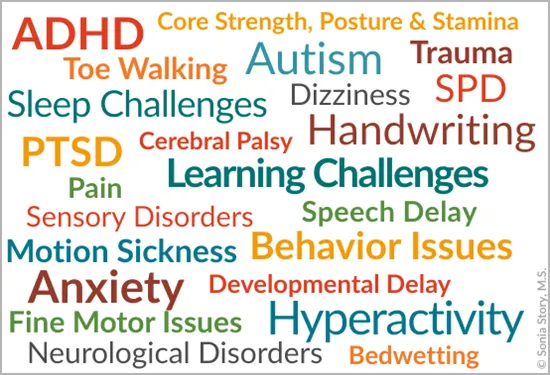
Primitive reflexes enormously impact our development. When primitive reflexes do not reach maturity in early infancy or toddlerhood it is associated with neuro-sensory-motor challenges, including: dyslexia, ADHD, toe walking, bedwetting, sensory processing disorders, speech delay, headaches, social issues, anxiety, and motor deficits. Here we discover what may indicate retained primitive reflexes, and how we can use reflex integration to address physical, social-emotional, mental health, cognitive, and behavioral challenges for individuals of all ages.

And 4 Reasons Neurodevelopmental Movements Can Help
Bedwetting and urinary incontinence are highly stressful issues. Children who struggle with “accidents” or an inability to control the bladder often feel embarrassed and may be cut off from participating in activities like sleepovers, camping, or even attending school. Do you know families who are trying to address bladder control or potty training issues, but nothing seems to work?

Plus the Developmental Origins and the Long-Term Solution
Discover the root cause of motion sickness, how the vestibular system develops, and why neurodevelopmental movements can help reduce or eliminate dizziness and nausea—naturally.

Addressing ADHD Through Neurodevelopmental Movements
Would you agree that—despite decades of research into symptoms and causes—ADHD is still widespread in both children and adults? Are you interested in lasting solutions for the sensory issues, anxiety, learning, and behavioral challenges that commonly accompany ADHD?
Building Better Learning from the Ground Up
Have you noticed that learning challenges in children seem to be more common, more pervasive, and more difficult to address than ever before? There are underlying reasons we explore in this article—along with simple, effective methods for reversing learning challenges.

How Neurodevelopmental Movements Can Improve Mental Health Outcomes
Learn how primitive reflex integration and developing the sensory systems can greatly improve regulation, focus, and mental health.

Dr. Blomberg’s #1 Recommendation For Tantrums, Meltdowns, and Troublesome Transitions
What is at the root of emotional and behavior disturbances? How can we prevent meltdowns and address challenging transitions?