

Get 2 Quick-Acting Tools for Motion Sickness
Plus the Developmental Origins and the Long-Term Solution
Discover the root cause of motion sickness, how the vestibular system develops, and why neurodevelopmental movements can help reduce or eliminate dizziness and nausea—naturally.
By Sonia Story, M.S.
Motion sickness can be miserably uncomfortable with symptoms including dizziness, nausea, vomiting, and headaches. Here we discuss:
- The roots of motion sickness
- Research on the vestibular system and its development in utero
- A natural, non-drug remedy to conquer motion sickness for good and why it works
- Case studies showing excellent results
- 2 quick-acting tools for short-term help to alleviate motion sickness
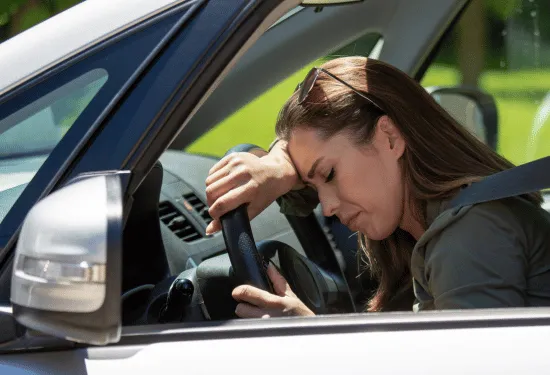 When I was young my parents would load me and my four siblings into a station wagon for a summer trip to Lake Michigan each year. Though I was eager to be in the Michigan countryside, I dreaded the two hour car ride because inevitably I would get "car sick" midway through the trip. Each time, my parents would stop the car to let me out so I could vomit under a tree at the side of the road. I would reluctantly stumble back into the car, apprehensive that the nausea would come back as we continued.
My parents were hoping I would grow out of it. But as far as I know, no one ever thought to ask: Why was the motion sickness there in the first place? Are some individuals just unlucky and more prone to motion sickness than others? Is there a remedy for motion sickness?
The Roots of Motion Sickness
Where does motion sickness come from?
One theory is that motion sickness arises due to the brain’s inability to reconcile conflicting sensory inputs from vestibular, visual, and proprioceptive systems. Harald Blomberg, MD, gave a plausible origin for this inability to process sensory information: He taught that when early childhood developmental processes are incomplete or delayed, it can result in less maturity of the brain and vestibular system, making someone more prone to motion sickness.
The vestibular system is comprised of structures of the inner ear that detect movements of the head. The vestibular system helps us maintain our balance and upright posture, have spatial awareness, respond to motion and gravitational forces, and process visual information during movement. It is also important to note that other sensory systems, such as vision and hearing, rely on inputs from the vestibular system for full development, and these may also be compromised when the vestibular sense is immature.
There may be many factors that can contribute to vestibular system dysfunction, such as injuries and reactions to medication. However, it is likely that for many individuals motion sickness is rooted in delayed or incomplete development of the brain and vestibular system due to a lack of neurodevelopmental movement stimulation in early life.
Research On Vestibular Stimulation
Researchers found that using electrical rotating chairs helped reduce motion sickness in college students, suggesting that vestibular stimulation is effective as a remedy for motion sickness (Shi et al., 2025). However, most of us do not have access to electrical rotating chairs. So how can we stimulate the vestibular system and reduce motion sickness without any special equipment?
Dr. Blomberg explained the way the vestibular system gets stimulation and reaches maturity naturally is through innate movements and sensory input during early infant development. He gave an illustrative example: An infant often has a less developed vestibular system if the mother had to go on bed rest during her pregnancy. Why? Because when a pregnant mother is on bed rest, the baby does not get adequate stimulation in utero from the mother’s movements and rhythmic walking. I myself had to go on bed rest during my last pregnancy, and our daughter—who was also born 3.5 weeks early—did indeed have vestibular underdevelopment. As an infant she would get enormously tense if placed on a swing, even when she was in my lap and being held securely. She clearly could not tolerate the sensation of swinging. Thankfully I could carry her in a sling and she received a lot of stimulation as we moved together. She was able to make up for the missed development and eventually started enjoying swings around the age of 5 months.
How the vestibular system develops in utero
Human beings are designed to develop the brain, body, and sensory systems starting from the stimulation in utero and early infancy. Much of the sensory stimulation babies receive in utero is rhythmic in nature:
"In the intrauterine environment, the fetus is exposed to multiple patterns of repetitive vestibular, tactile, somatosensory, auditory, and visual stimulations. Many of these stimulations are rhythmic, and the fetus detects these patterns and differentiates their variable rhythms. The fetus recognizes these different rhythms (the mother’s heartbeat, breathing, voice, walking, etc.) and modifies its own behavior in response to the mother’s rhythms" (Provasi et al., 2021, page 13).
Not only is the fetus exposed to the mother’s rhythms, a healthy newborn has innately generated movements and rhythmic patterns (such as sucking) which also stimulate brain and sensory development, including vestibular development. In addition, the baby’s interactions with the mother and caregivers give more rhythmic and sensory stimulation to the baby. Provasi et al., (2021) found that for babies in the NICU, having their mothers give them rhythmic stimulation was important and provided far better outcomes for the infants.
A Non-Drug Remedy to Conquer Motion Sickness and Why It Works
Optimal development occurs largely through interaction with caregivers along with the full expression of the innate infant movements. So if early development was not optimal, can we use these innate movements to promote better vestibular functioning later in life?
Clearing motion sickness by harnessing the power of development
The use of neurodevelopmental movements to help overcome motion sickness makes sense. These early infant movements—including innate rhythmic movements and primitive and postural reflexes—involve motions of the head which we know stimulate the vestibular system, and they generate more neurological connections to build maturity of the vestibular system and other sensory-motor systems.
With innate neurodevelopmental movements we can help to develop the vestibular sense even years or decades beyond infancy. How? The brain and the sensory systems are already wired to develop and mature in response to these neurodevelopmental movements. By harnessing the power inherent in development itself, the vestibular system can grow to function in more mature, organized ways. This is a true natural remedy that appears to be highly effective for many individuals in a wide age range—not only for motion sickness, but for other sensory-based disorders as well.
It is important to note that many individuals who experience dizziness also have headaches and other sensitivities. After doing neurodevelopmental movements consistently, they often experience reductions in headaches, less anxiety, and improvements in sensory disorders that commonly co-occur with motion sickness. I wish my parents had known about this when I was a child!
To some extent, I did grow out of the motion sickness as I got older, however, I was still left with lingering neuro-sensory-motor deficits from early childhood that I carried into adulthood. Carrying these deficits from early childhood is common in teens and adults which I discussed in this earlier post.
See these and other compelling case studies showing how effective neurodevelopmental movements can be for addressing motion sickness.

Extreme Motion Sickness Significantly Improved
This little girl's motion sickness was so severe she could not ride in a car for more than a few blocks, nor handle spinning games. Now she gleefully spins in circles without any issues!
OT Gets Relief from Car Sickness
This occupational therapist could not read even one sentence during a car ride without experiencing motion sickness. After maturing her vestibular system with rhythmic movements, she could comfortably read in the car for over 2 hours at a time!

Help for Vestibular Issues and More
This 4-year-old boy was experiencing motion sickness, balance challenges, and developmental delays. After doing rhythmic movements and reflex integration, his motion sickness has almost completely disappeared, and he's seen great improvements in many areas.
2 Quick-Acting Tools for Short-Term Relief from Motion Sickness*
For most individuals, long-term resolution of motion sickness will require consistent neurodevelopmental movements such as those from the Brain and Sensory Foundations training. For short-term relief, motion sickness or dizziness can often be reduced with the following quick-acting tools:
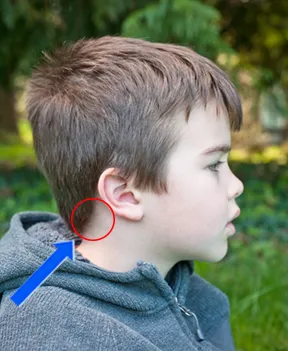
1. Place the fingertips lightly over the mastoid processes on either side or both sides of the head just behind the ear (see photo below, place fingers in the area of the red circle) for approximately 3 minutes or more if needed. Breathe through the nose. You can also gently tap or massage these areas. Alternately, you can touch the mastoid process on one side of the head and hold the other hand over the navel for a few minutes; then switch sides and repeat.
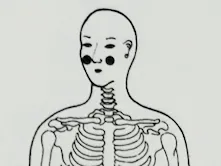
2. Place the fingertips lightly over the points on the underside of the cheekbones (see graphic below) for 1 to 3 minutes or more while breathing gently through the nose. You can also gently tap or massage these points.
Technique and photo credit come from the book: The Touch of Healing: Energizing the Body, Mind, and Spirit With Jin Shin Jyutsu, by Alice Burmeister and Tom Monte.
*If motion sickness is severe or persists, seek guidance from a health care provider.
Conclusion
We do not need special equipment to overcome motion sickness. Doing neurodevelopmental movements with consistency can work to remedy motion sickness in both children and adults. Enjoy these inspiring real-life examples of success in reducing or eliminating motion sickness in this natural and health-giving way.
Please share this article with others. It could very well lead to enormous improvement in quality of life for those you care about!
References
Burmeister, A., & Monte, T. (1997). The Touch of Healing: Energizing the Body, Mind, and Spirit With Jin Shin Jyutsu. Bantam.
Provasi, J., Blanc, L., & Carchon, I. (2021). The importance of rhythmic stimulation for preterm infants in the NICU. Children, 8(8), 660.
Shi, L., Zhao, J., Lu, J., Cao, C., Zhang, Q., Qiu, C., Jin, Z. and Yan, S. (2025). Effects of two kinds of vestibular function training on reducing motion sickness in college students. Frontiers in Neurology, 16, 1433065.
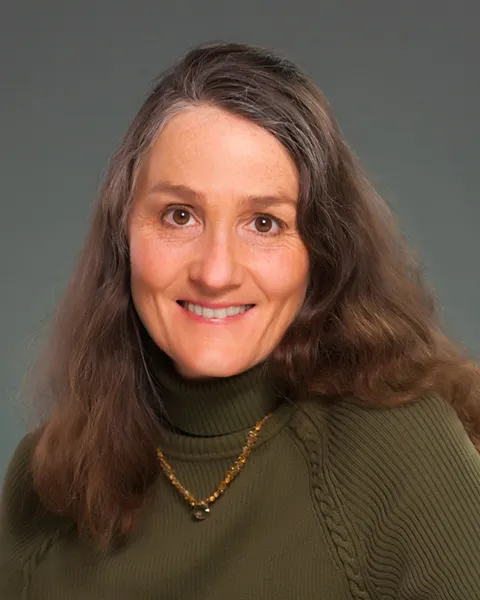
Sonia Story, M.S. has been teaching neurodevelopmental movements since 2006.
Sonia developed the Brain and Sensory Foundations curriculum and the Foundation for Optimal Function course to provide comprehensive training in neurodevelopmental movements—combining innate rhythmic movements, play, primitive reflexes, and postural reflexes.
She earned a Bachelor's degree in biology/psychology and a Master’s degree in Movement Sciences. She is the author of The Importance of Reflex Integration and the Evidence eBook, giving the rationale and evidence basis for using neurodevelopmental movements for helping with challenges such as ADHD, Sensory Processing Disorders, anxiety, emotional dysregulation, visual skill deficits, poor social skills, gross and fine motor delays and other neurodevelopmental and behavioral disorders.
Her work is featured in numerous podcasts, summits, and conferences, and in the books Almost Autism: Recovering Children from Sensory Processing Disorder; Special Ed Mom Survival Guide; Family Health Revolution; and Same Journey, Different Paths—Stories of Auditory Processing Disorder.
Sonia’s mission is to help children and families experience the profound benefits of neurodevelopmental and integrative movements for more functional and fulfilling lives.